
High Holiday Theology: a Reform Perspective
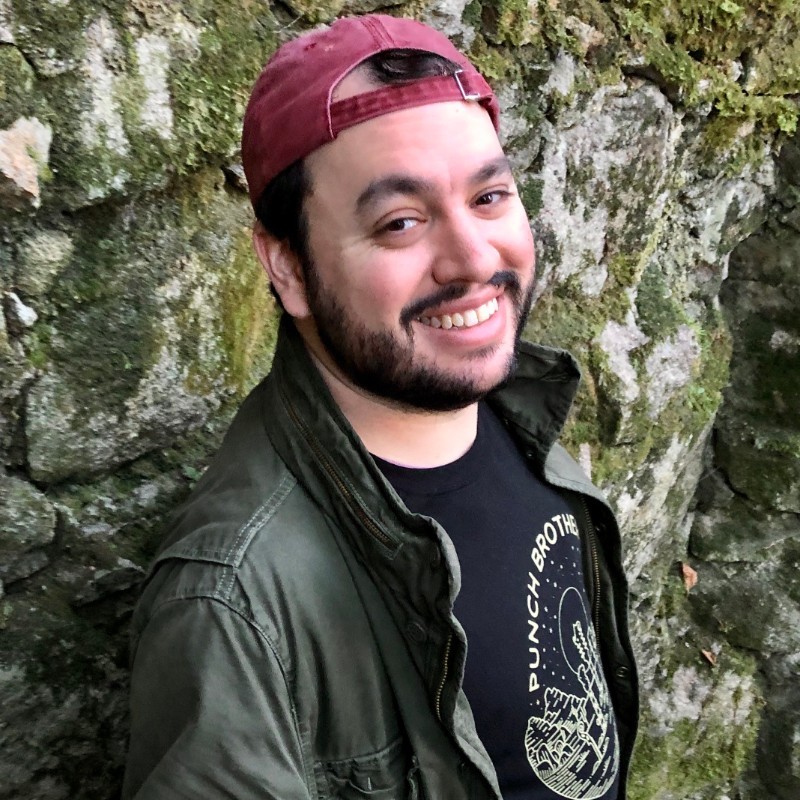
Teshuvah in the Cathedral by Adam Zemel
Most of the Rosh Hashanah and Yom Kippur services I have attended in my life have been inside a Methodist church in Northwest D.C., a space my congregation, Temple Micah, borrows each year to accommodate the larger attendance. I love praying in that church, first because it reminds me of my earliest childhood, before Micah had a building and we shared space with an Episcopal church all year round. And second, because of the majesty of the sanctuary.
The design of the sanctuary in the building Temple Micah consecrated in 1995 was inspired by a Quaker meeting room. The ceilings are high, but the space itself is simple, with blond wooden floors and bima, wide white walls, and no fixed seating. It is a wonderful place to pray, and a counterpoint to the airy solemnity of the century-old stone church, which wikipedia claims is the fourth largest religious structure in D.C.
All of the most obvious, moveable Christian signifiers and iconography are removed from the sanctuary, and our congregation brings a mobile ark to hold our Torah scrolls at the center of the chancel, transforming it into a bima. Before you ask: Yes, of course I am aware that I am in a church, some visual cues cannot be excised. But the high stained-glass windows and vaunted ceilings, the pews uniform down the nave, the balcony at the rear; the space evokes a state of mind and heart over which no religion holds monopoly, in an entirely different spiritual register than Micah’s sanctuary. These shifts back and forth between considered minimalism and aspiring grandeur for me signify the purpose and experience of the Season of Teshuvah.
Teshuvah is difficult to explain. We translate its root-word as “return,” but any rabbi will tell you that in the context of the season, the meaning is much more subtle and expressive; expansive, too, a spiritual accounting that is something more than repentance. From the pews of that church I have listened to the rabbi share a passage from the American philosopher Thomas Nagel on more than one occasion to describe the task:
Existence is something tremendous, and day-to-day life, however indispensable, seems an insufficient response to it, a failure of consciousness. Outrageous as it sounds, the religious temperament regards a merely human life as insufficient, as a partial blindness to or rejection of the terms of our existence. It asks for something more encompassing without knowing what it might be...How can one bring into one's individual life a full recognition of one's relation to the universe as a whole? (Secular Philosophy and the Religious Temperament)
Daily life is replete with distraction and compromise, not well-constructed for recognizing one’s relation to the universe as a whole. It is difficult, amidst the to-and-fro, to consider that which is all-encompassing and unknowable. But <em>teshuvah</em> comes from some deep human part of us that will not even partially reject the terms of our existence. Teshuvah is how we sign our names.
This work is necessary, and yet we flinch from teshuvah without proper preparation. It is painful to sustain. Examining the world and our human lives in this manner pushes us to acknowledge that our most honest questions have no final answers. Who am I? Where have I gone wrong? What does it mean to belong in the world? Is there purpose to our numbered days? We are compelled by these questions at the same time that we shy away. They push us to extremes of vulnerability, resignation, fear, possibility, conviction, hope.
The High Holidays offer a framework for our efforts, including a liturgy that overlays our traditional patterns and modes of prayer, complexifying and ornamenting the constant and necessary themes and motifs of Jewish worship. The starkest expression of this, liturgically, is the Un’taneh Tokef, when we acknowledge that we are powerless and contend with the fundamental condition of our sweet and bitter lives. “[Our] origin is from dust/And [our] end is from dust” (verse 27, trans.Dr. Joel Hoffman). The Un’Taneh Tokef reminds us that Teshuvah is more than the accounting, more than the repentance, more than the heightened fervor of our prayers or the deeper plumbing of our selves; it is all these things, accompanied by the surrender of admitting that none it grants even the illusion of control. Most likely written around 500 CE, this poem has carried across generations to meet us each fall like a warm and imposing hand on the shoulder and the whisper of a still, small voice: Remember the dust.
We do the work of teshuvah because it is what there is to do, and because it reminds us that we are human. I also believe it cultivates an emotional state that prepares us to experience God, who, if you ask me, is accessible through feeling rather than thought. The surrender of Un’taneh Tokef functions, for me, as a sort of culminating catharsis that evokes a brief spiritual clarity, an awareness of how grateful I am to be here, present in the world and connected to people I love. I had nothing to do with it, yet I am here. What is that if not a miracle?
To me, a meaningful high holiday observance aspires to honor the work of teshuvah by contextualizing the seasonal liturgy, its crescendos and crashes and variations, through music and ritual and language and space, in such a way that its moral depth and spiritual force are as compelling today as they were to the generations that shaped and compiled it. We deserve to experience it this way, with all the rumbling power and static charge of a thunderstorm. We are each hurt and yearning in ways that do not end, and teshuvah has the power to conjure in us the spiritual humility and ennobling grace to coexist with that brokenness.
And so you will find me on the first and tenth day of each year, in the sweeping grandness of that Methodist church, the words of philosophers and poets share space with those of the rabbis and prophets of our long tradition, and before the chanting commences, a lonely cello haunts the sanctuary with the notes of Kol Nidre.
This is Adam's perspective and his alone. He does not represent Reform Judaism as a whole. Affiliation and connection with official movements are subject to change as individuals grow and experience different ways of doing and being Jewish. This reflection represents one individual perspective within a diverse Jewish movement and should not be understood as representative of everyone who identifies as Reform.

Adam Zemel is a writer based in Somerville, Massachusetts. He grew up in a Reform congregation in Washington, D.C., and spent 19 summers at URJ Camp Harlam as a camper, counselor, and supervisor. Zemel has an MFA in fiction, and has published Jewish content in The Daily Beast, Hey Alma, New Voices, and elsewhere. He is also the Director of Communications and P.R. at Hebrew College in Newton, MA.


Comments