
Interview with an Agnostic (abridged)
- Shelby Alpert
- Mar 3
- 4 min read
Updated: Apr 1
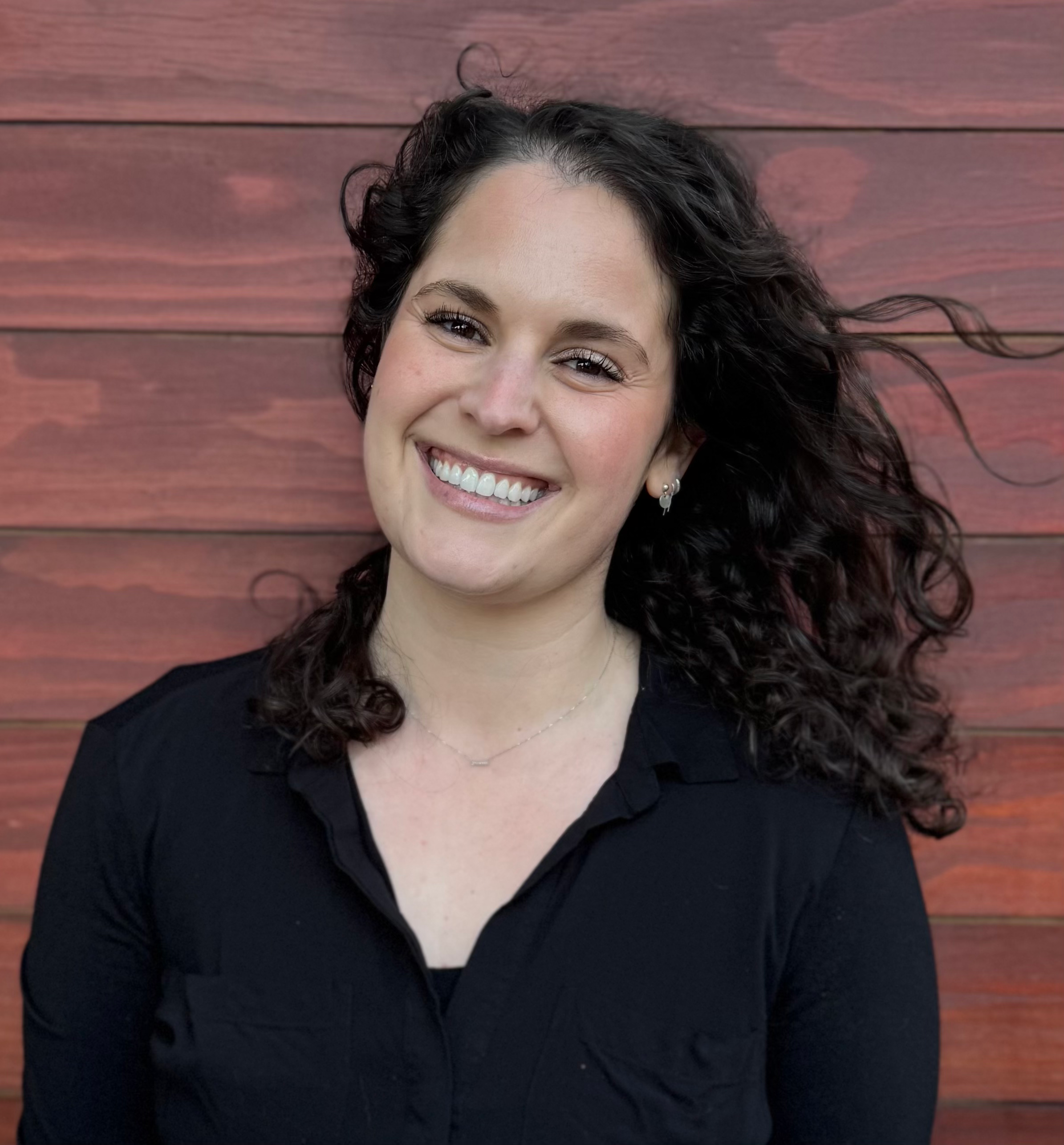
Rabbi Miriam Hoffman and Shelby Alpert

Shelby Alpert is an emergency room nurse, daughter, sister, and friend. She grew up heavily involved in the Jewish community but has since become a bit of a skeptic. She loves watching movies about existentialism and personal growth.
RMH: Do you believe in God?
SA: No, I don’t believe in God.
RMH: Do you believe in something you wouldn’t call God?
SA: Maybe. I don’t believe things happen “the way they’re supposed to.” Things happen because of our choices. I’m very science-minded, and while science and religion can coexist, it’s hard for me to fully buy into both.
If anything, I connect more to something like Mother Nature—the beauty of the planet. But humans have kind of ruined everything we’ve touched. It feels more spiritual than religious.
RMH: When I say “God,” what do you think I mean?
SA: A higher power that’s maybe supervising things. But I don’t believe in divine intervention. I think people use God as an excuse—to avoid responsibility or to justify their actions.
RMH: Do you think it’s possible that humanity is the problem, not God?
SA: Maybe. But I go back to my science brain: there’s more proof that God doesn’t exist than that God does.
And then there’s suffering. If God exists, why is there childhood cancer? People try to explain it as part of some greater plan, but that just doesn’t sit right with me.
RMH: Do you think belief in God is helpful for people?
SA: I’m anti-religion—I think it can be harmful and used to justify bad behavior. But belief in something? That can be comforting. I actually wish I believed that strongly in something, because it would give me a sense of purpose.
At the same time, if there is some higher power, I think I’d just be angry. I’d rather not believe than believe in something I think is making things worse.
RMH: Do you think your perspective would be different if God were taught differently?
SA: Maybe. But I struggle with the idea of a “flawed” God. If God is flawed, then God just feels human—and what’s the point?
To me, it has to be black and white. If God is good, then he’s not doing a great job. And if God is bad, why believe at all?
RMH: What parts of Judaism do you still connect with?
SA: The values. I think Judaism, at its core, emphasizes treating people well and being accepting. I still care about that, and I’d want to raise my kids with those values.
I love the culture, the holidays, the traditions. I just don’t connect to the religious side. I’m not going to read the Torah or look to it for answers—I just don’t care.
And honestly, everything that’s happened in the world in recent years has made it harder to believe in anything like that.
RMH: It sounds like the word “God” itself might carry baggage.
SA: Yeah, but I don’t think I care enough to fight that. If I believed in something, I’d just define it for myself. I’d probably use a different word.
RMH: Have you ever had a moment that felt sacred or holy?
SA: I’ve had moments that made me feel like there definitely isn’t a God.
Like when my grandfather died in my arms. People might say that moment had meaning—that it shaped who I became. But for me, it was just traumatic.
Working in healthcare, I see so much suffering. People who don’t deserve it. It just reinforces that there’s nothing there helping them.
And even in quieter moments—like seeing a butterfly—I don’t experience that as divine. It’s just… nature continuing, in spite of us.
RMH: I’ve had moments that feel different—like a sense of connection or warmth that I would call divine. Not that God caused anything, but that something meaningful is present.
So I wonder: why not still believe in God, even alongside everything you’ve said?
SA: My therapist says I’m a “yes, but” person, and I’m trying to become more of a “yes, and” person.
So yes—it’s possible God exists. I’m not denying that. I just haven’t had any experience that makes me feel like that’s real.
I’m open to it. I just don’t see myself getting there.
RMH: So you’re not opposed to the possibility of God.
SA: Right. I connect more to the idea of ancestors than to God. Like, maybe my grandparents are checking in on me somehow. I don’t believe in heaven, so I don’t fully know how that works—but it makes more sense to me.
Energy can’t be destroyed. If our souls are some kind of energy, then something must continue.
RMH: It’s interesting that you believe in a soul.
SA: Yeah. I’d probably call myself agnostic.
But I’m so anti-religion that it’s hard to separate the two.
And I mean—I have a crystal hanging above my door to ward off evil spirits, so clearly I believe in something, even if I can’t define it.
If someone said, “I believe in that too—I just call it God,” I’d be like, “Okay, great. I just call it something else.”
If you'd like to read the entire interview, be in touch!

Comments