
“God Cafe”: A Contemporary Reconstructionist Approach To Theology
- Sarah Brammer-Shlay
- Feb 24
- 4 min read
The God Cafe Project began in 2017 before I had given it that name. The exploratory idea was inspired by my unit taught by Rabbi Jacob Staub on theology in my Reconstructionism 101 class at the Reconstructionist Rabbinical College. Learning about the ways that Kaplan and other Reconstructionist thinkers have thought about God prompted me to reflect on particular moments in my life where divinity – what God was and is- felt very clear and compelling to me.
My background is in community organizing, so whenever I am experiencing something new or asking myself a compelling question, my first instinct is to reach out and ask: Has anyone else felt similarly or am I alone? The answer is rarely that we are alone.
Most experiences we have in our lives, although specific to our own particular backgrounds, are rarely a completely unique or isolated experience. So, bringing my relational organizing skills with me, I asked a series of interested people to respond to this question: “What is a specific time in your life where you found yourself particularly connecting to or grappling with God and/or divinity?” It turned out people had a lot to say. These conversations, although emotionally moving both for me and the individuals sharing, presented two potential limitations. The first is that it was a high bar to expect someone to be willing to have such a vulnerable conversation with someone they minimally know. The second is that given that our society often avoids these types of conversations, to jump immediately into an isolated reflective conversation might require previous reflection that many individuals have not found the space to have. It takes a lot of emotional work to pick up the phone and share deeply vulnerable moments with someone. At times, we need to hear others’ stories to ignite remembering our own. It is not always easy to reflect on your own experience without listening to others’ first. In a similar way to feminist consciousness raising groups, there is power in the communal experience. The community is core to Judaism and it is core to Reconstructionism. Therefore, after holding these initial individual conversations, I began to experiment with how to have these sorts of honest, vulnerable and seemingly taboo conversations in a group setting.
The God Cafe Project has evolved into a curriculum which includes a one-time workshop – “God Cafe”- and also a multi-week cohort experience. I have had the privilege of conducting God Cafes across the United States and over Zoom over the past few years. I use creative and diverse pedagogy to facilitate conversations on a topic rarely discussed. I am continuously amazed by individuals’ capacities to open up and share with each other on a topic often left untouched. By rooting the conversation in individual experience, we create a more equal playing field where all voices are heard and seen as vital to the conversation.
In the multi-week version of the project, I do include more formal teaching about Judaism’s diverse theological approaches ranging from the Biblical to Contemporary Period. This addition of text demonstrates the variety of ways in which one can think about God and demonstrates that we are steeply aligned with our tradition through our exploration and questioning of how we relate to God. Interestingly even in these sessions where we look at text, what participants often are most excited to hear is about each other’s experiences and each others’ questions pertaining to the subject. The unique value proposition of The God Cafe experience is the ability to hear personally from each other; that is in fact the holy and sacred encounter.
I begin each God Cafe experience by asking participants to release any expectation they might be holding to be articulate or completely rational. Upon first glance, the move away from rationalism might seem counter to the beliefs of Reconstructionist Judaism. A core part of Kaplan’s vision for the Reconstructionist movement is that we should conduct rituals, pray and create communal experiences that are based in our contemporary values, including a rational approach around God. In some Reconstructionist communities, it might feel counter cultural to open up the God conversation in a way that does not necessitate rationalism as an entry point.
Although I appreciate our movement’s integrity on this topic, I also strongly believe that without releasing ourselves of an expectation to be rational when entering the conversation, we limit our creativity and autonomy. For many in and out of the Jewish context, the conversation around God is centered around belief. The God Cafe works to combat this notion. I do not believe that belief is where this conversation must begin. In the God Cafe workshop, I have decided to center our conversations around experience. At the core of all the work I do lies the previously stated question: “What is a specific time in your life where you found yourself connecting to or grappling with God and/or divinity?” I have found by centering around a particular moment in one’s life, it gives space for individual agency. Theology becomes not just a project for a well-written theologian but rather for every individual. At the core of Reconstructionist Judaism is the pursuit of Jewish community that is accessible and resonant for the masses; where individuals are empowered to be knowledgeable and grounded leaders in their communities. What more beautiful way to model that pursuit than with an exploration of the Divine?
Throughout my experience leading these conversations across diverse communities, I have learned something core about my own belief system; that more than anything I believe that people have the natural authority to make and notice meaning in our lives. I see central to my job as a future rabbi and leader in the Jewish community the need to continuously create space for others to believe that as well.
Originally posted here.

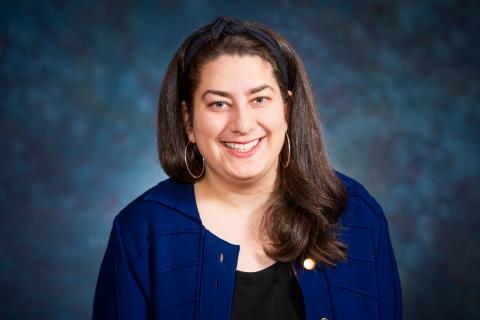
Rabbi Sarah Brammer-Shlay is a graduate of the Reconstructionist Rabbinical College. She serves as the Dean of Religious Life and Chaplain at Grinnell College in Iowa. She created The God Cafe Project in 2019 with the goal of creating space for people to explore moments in their lives of Divine connection and grappling. At the core of her identity as a spiritual leader and community organizer is the desire for people to get out of isolation and into connection.


Comments